
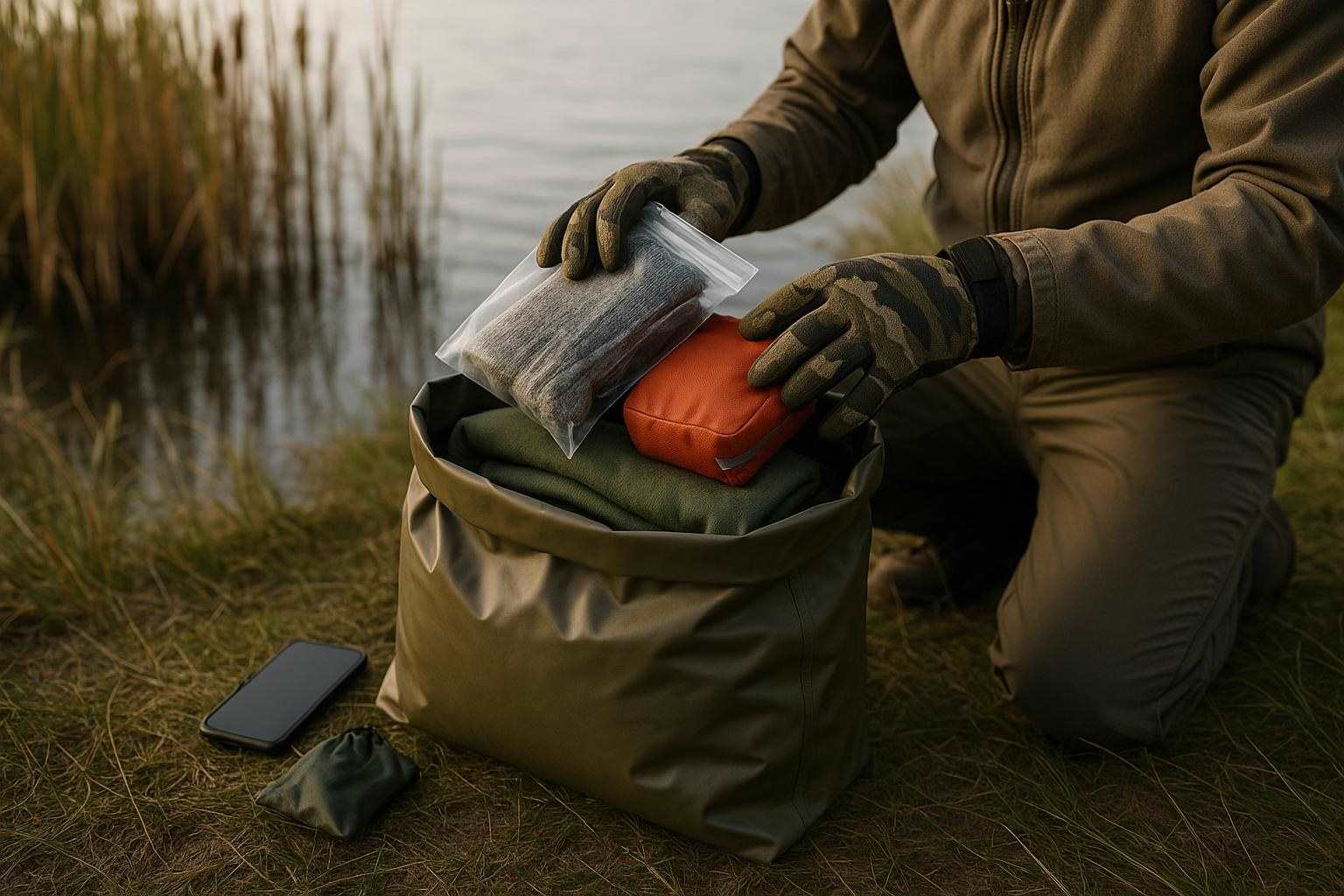
A packing problem can become a planning problem. Hunters often add clothing, calls, shells, food and backup equipment because they are unsure what the day will involve, then learn that the guide supplies some of it. Good Minnesota duck hunting preparation is less about carrying every possibility than identifying the decisions that affect comfort, legality, safety and restraint. Confirm the trip details, check what is provided, and pack for reasonably expected conditions rather than anxiety.
Get the trip details in writing
Before sorting gear, ask the guide for the meeting time and location, whether the hunt involves a boat, blind, long walk, wading or mixed terrain, and what equipment each person must bring. Also ask about expected weather, access conditions, restrooms, food, transportation and how you will communicate if plans change.
These answers determine the right bag and clothing. A boat outing may call for a compact dry bag and soft layers, while a walk-in location may justify extra socks and a more deliberate load. Mention mobility limits, allergies, medication needs or concerns about cold exposure before the trip so the guide can plan around them.
Do not treat a general packing list as a substitute for confirmation. Arrangements and conditions can change close to departure when water levels, wind, access or local restrictions affect the plan.
Build clothing around adjustment, not bulk
Choose a moisture-managing base layer, an insulating middle layer and an outer layer suited to wind and precipitation. Pack spare socks in a waterproof bag; wet feet can turn a manageable outing into a miserable one. Avoid relying on cotton as the only layer next to your skin when cold or damp conditions are possible.
Match footwear to the ground and water described by the guide. Taller or heavier boots are not automatically better: oversized boots can hinder walking, while insufficient insulation or traction can create a safety concern. Ask whether to expect mud, ice, deep water or uneven banks, and follow the recommendation.
A hat, gloves, eye protection and hearing protection have a large effect on comfort and safe conduct. Bring hand warmers when appropriate, but do not let accessories displace a dry layer or essential medication.
Use a short gear checklist
Separate essentials from optional preferences. Put essentials in the main bag first, then add only items that solve a specific problem.
– Required license, stamps, identification and permits
– Legal firearm, appropriate ammunition and secure transport case
– Weather-appropriate clothing, spare socks and suitable footwear
– Eye and hearing protection
– Water, food, medication and a small first-aid supply
– Phone, power bank and waterproof storage
– Headlamp or other reliable light for early movement
– Personal flotation equipment for a boat or water travel
– Waste bag for shells, packaging and personal trash
Check firearm function and transport requirements before leaving home. Do not make last-minute modifications or assume equipment is legal because it was used on a previous trip. If the guide supplies decoys, calls, blinds or a boat, leave those items home unless there is a clear reason to bring a personal backup. Duplicate gear adds weight, creates confusion and can be left behind.
Confirm the rules before the drive
Waterfowl regulations can change by season, zone, species, method, possession limit, licensing requirement or special closure. Requirements may also differ from those in another area you have hunted. Check current official Minnesota guidance and applicable federal requirements before the trip, and keep proof of required documents accessible.
Do not rely on an old screenshot, a friend's memory or an unchecked printed summary. Ask the guide which current rules matter most for the outing, but retain responsibility for knowing the laws that apply to you. Verify ammunition, shooting hours, tagging or reporting obligations and transport requirements close to departure through current official sources.
If a regulation, boundary or species identification is unclear in the field, pause and seek clarification rather than turning uncertainty into a legal or ethical mistake.
Agree on ethical decisions before the first opportunity
Discuss expectations with the guide before heading out: shooting lanes, safe angles, calling signals, retrieving responsibilities and what to do when a bird is down but difficult to reach. Clear communication helps the group act decisively without pressuring anyone into a questionable shot.
Know your effective range and identification limits. If visibility is poor, birds are too far away or you cannot confidently identify the species, pass. A missed opportunity costs less than a wounded bird, unsafe shot or violation. Ethical conduct also means staying within the agreed shooting area, unloading when directed and stopping immediately when a safety concern arises.
Retrieval is part of the responsibility. Follow instructions around boats, ice, current, deep mud and private boundaries. Do not enter hazardous water or cross a boundary to recover a bird; ask for a safer plan.
Leave the place better than you found it
Conservation begins with compliance but does not end there. Carry out spent shells, food wrappers, tape and broken gear. Keep vehicles, boats and blinds free of unnecessary debris, and avoid trampling vegetation or disturbing sensitive areas when a lower-impact route is available.
Respect private property, closed areas and other hunters. Do not move through a setup without permission, crowd another party's working space or treat access as automatic. Report wildlife concerns, habitat damage or apparent rule violations through the appropriate official channel rather than escalating a field argument.
Before leaving home, remove mud and plant material from boots, waders and equipment when practical. Clean and dry gear according to appropriate biosecurity guidance, especially after moving between waters, to help reduce the spread of unwanted organisms.
The best preparation often ends with a smaller bag and a clearer plan. Confirm the guide's arrangements, choose adaptable layers, verify current regulations and decide in advance which conditions will make you pass on a shot. Packing less is useful only when it reflects better judgment-the kind that protects the hunter, the resource and everyone sharing the field.