
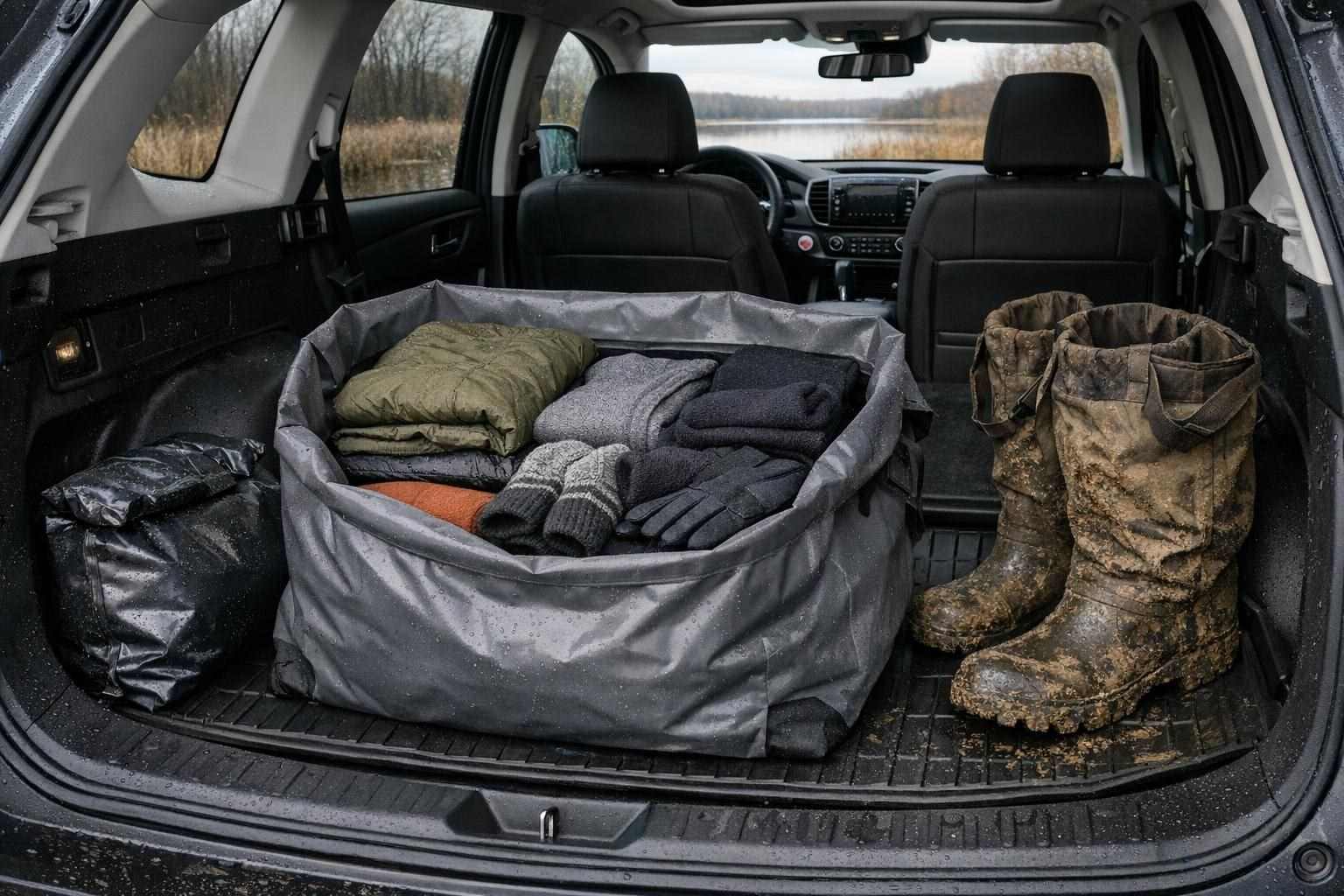
Some simple consideration to covering your rear in regards to packing the dry change for your hunt are listed below. Now, I know that you might not want to carry all of this gear but trust me, once you have missed carrying a single missing basic item, you will soon realize that it is far better to err on the side of caution.
Pack the change before the first decoy goes out
The clothes you take for the drive home should be packed before you leave the house. This could be in a waterproof rucksack or other container which is left in the car and kept separate from the rest of your wet hunting clothes and your waders and dirty gloves etc. You would look for a bag that is easily recognizable amongst all your other hunting gear.
The clothing to bring on the hunt should be divided in layers to be able to wear them without getting wet. One layer for the base, one insulating layer, socks and an outer layer of clothing should be sufficient for one hunt. Another hunt may require even more clothing like spare pants, a hat or a second pair of gloves. Based on the forecast for the weather, the expected length of the drive, and how wet one expects to get, one can choose the items to bring.
Remember that one pair of socks can feel cool and wet in the field and then several hours later start to cause discomfort. Plan your clothing for the longest journey home and for anyone other than yourself who will be driving back.
Separate wet gear before it contaminates the dry bag
When you leave the blind start sorting as soon as possible. All used layers go in a separate wet bag, muddy boots and waders are put in a corner of the truck where they won't get dirty. The plastic liner of waders can be used as temporary storage for wet clothing but don't rely on it to dry out your gear.
Also check your cuffs, knees, seat of your pants and pockets for moisture and for any field debris like empty shells, spent materials, etc. The areas of your clothing that come into contact with your body will hold the most amount of water and dirt. Also be sure to remove any harvested birds from your pockets as well as any other field waste, and dispose of according to local regulations.
If an item is packed dry but gets wet during loading then remove it from the clean clothing bag straight away as one damp item can render the rest of the items in the bag less useful. We recommend that this clothing is packed in a separate wet bag from the used outer layers.
Look for symptoms that need more than a change of clothes
You may not notice that dry clothing can hide a problem with your body. In order to hunt well you should have good bodily fitness. However, persistent shivering, numb fingers and toes, clumsy movements, confusion or a worsening headache all mean that you should stop hunting and try to find out what is wrong with you. Do not rely on first aid for hunting, seek proper medical help as soon as possible if you have become ill on a hunting trip.
Recognize that a very wet and/or tired hunter may not report an illness symptom properly. Treat the hunter, who is cold and/or tired, like you would treat a very drunk person and have him or her sit down in a warm and dry location. See if the problem goes away with a hot drink and a change of clothing. If the problem does not go away, or gets worse, seek proper medical attention.
When there are minor injuries they need to be looked after also. Wet clothing can conceal a blister or cut on a boot, and a sore spot on a glove. Be sure to check for these before getting in the truck for a long drive home.
Use the vehicle as a clean transition zone
The vehicle or trailer is best for changing from hunting clothes into travel clothes. They should be able to lay out a washable mat or towel on the floor in front of where they will be sitting. Muddy boots and gear should be contained to prevent soiling clean clothing. Everyone changing should have a clean seat or area of floor to put their clean clothes.
Work steadily through your clothing. Remove the wettest outer layer first. Then work your way down through your boots and socks. Damp socks are the worst. Dry your hands before you start changing into your cleanest base layers and then your insulating layers. A headlamp or a vehicle's interior light will help you find that missing sock, check the tear in a cuff for further deterioration or clean the water from the soles of your boots.
Before leaving make sure everyone is on board, all doors and tailgates are shut and you have not forgotten any pieces of gear at the access point. Remember it is just as important to get home safely as it is to get out to the blind in the first place. Don't let poor weather or tired drivers cause problems on the return journey.
Make the clothing choice match the hunt plan
Duck hunting clothing should be thought about with the return trip in mind. A short local hunt for example will need little more than to change your shirt, your socks and your gloves. But for a guided trip to a place that is a long way away and where you will have to go to and from a blind, on a boat, loading and unloading, it is wise to change into warmer clothing, such as your base layer and your mid layer, as well as your pants.
Look at the expected weather, access, time spent at the blind, number of hunters and potential shelter for a short local hunt. Ask your guide what has to stay on for the hunt and what can be left in the field with other gear. Conditions and requirements for a hunt can change so check for current weather, access and safety information for the area where you will be hunting waterfowl.
Most garments can be folded in a small space to keep them from getting crushed by shells, decoys, etc. While packing bring only what you absolutely need for the day, it is always better to err on the side of caution and bring at least a few spares of basic items. Keep with your field gear a small repair kit with items like scotch tape and spare laces.
Dry, inspect and reset before the next outing
Keep wet clothing in a bag, open at home as soon as possible, to allow clothing to dry out. Check clothing for signs of wear, look for cool spots and see if it still smells. Clean mud from clothing according to the clothing's care label. Do not store contaminated clothing until it has been cleaned.
Don't put away clothing that still feels cool and damp inside even if the outside is beginning to dry out. This moisture in clothing such as in gloves, cuffs, etc. can create bad odors and even weaken up the material over time. Clean mud off clothing according to manufacturer's directions. Heavily soiled items need to be treated and stored in separate areas until they can be cleaned properly.
Be sure to list and recall what you wished you had brought. That will be even more valuable than purchasing additional gear for the next time you head out for duck hunting. If you notice and rectify a small problem with your clothing before it becomes a major problem affecting your hunting, safety, and appreciation of nature, then you've done a great job of preparing for your hunt.